DinoTycoon Review: Dino Theme Park Game With Token Rewards — Fun Concept or Just Another Tap-to-Earn App?

Introduction
DinoTycoon is a Telegram mini app that blends idle gameplay with Web3-style reward mechanics. The project presents itself as a dinosaur theme park management game where players upgrade attractions, complete mini-games, and accumulate in-game currency that may later translate into token rewards.
At first glance, DinoTycoon resembles many modern tap-to-earn projects built inside Telegram. It offers colorful visuals, simple interactions, and promises of future token distributions. However, after exploring the interface and available features, the game reveals both interesting ideas and some noticeable limitations.
What This Product Is
DinoTycoon positions itself as a park management game combined with a casual reward system. The main goal is to develop a dinosaur theme park by attracting visitors and upgrading different attractions.
The more activity generated in the park, the more in-game currency players receive. According to the concept behind the project, this activity is linked to potential token rewards in the future.
Players interact with the game through several sections, including:
a main park management screen
an earning system based on tapping
mini-games located in a “Playground” section
a reward and package system
airdrop-related mechanics
This structure makes the app feel similar to other Telegram mini games where gameplay activity is designed to accumulate points tied to a possible future crypto token.
Key Features
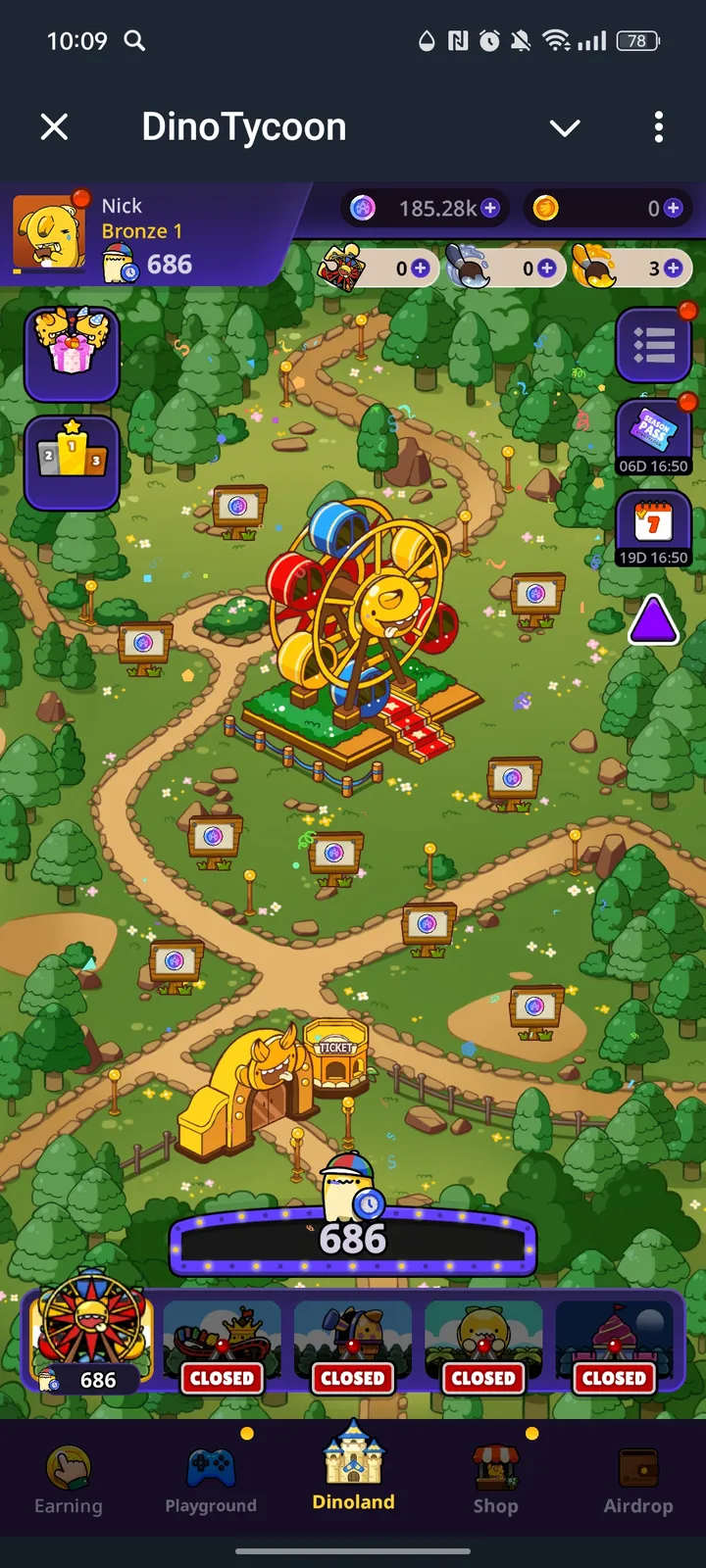
One of the central mechanics of DinoTycoon is the park development system. The park is displayed as a cartoon-style map filled with attractions and pathways, with a large Ferris wheel placed in the center as a primary landmark.
Around the park area, multiple attraction slots appear to represent future upgrades or unlockable features. Some sections are initially closed, indicating that progression is tied to player activity and resource accumulation.
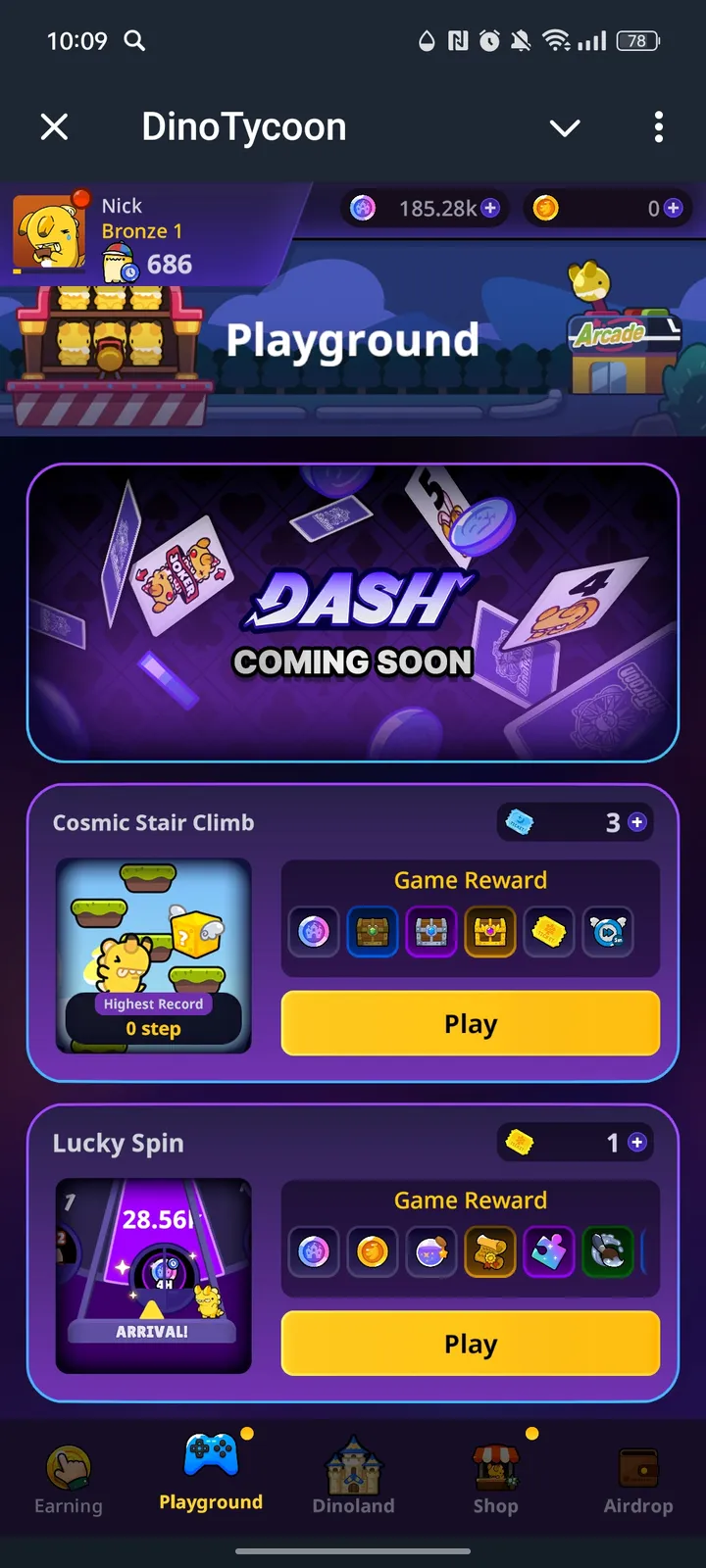
Another major feature is the mini-game section called Playground. This area contains small casual games designed to provide additional rewards.
One example is a platform-style mini-game where a dinosaur character climbs floating platforms while collecting rewards. Another activity includes a spinning wheel game that appears to provide randomized rewards such as coins, tickets, or in-game items.
These mini-games are likely intended to increase engagement and provide alternative ways to accumulate resources.
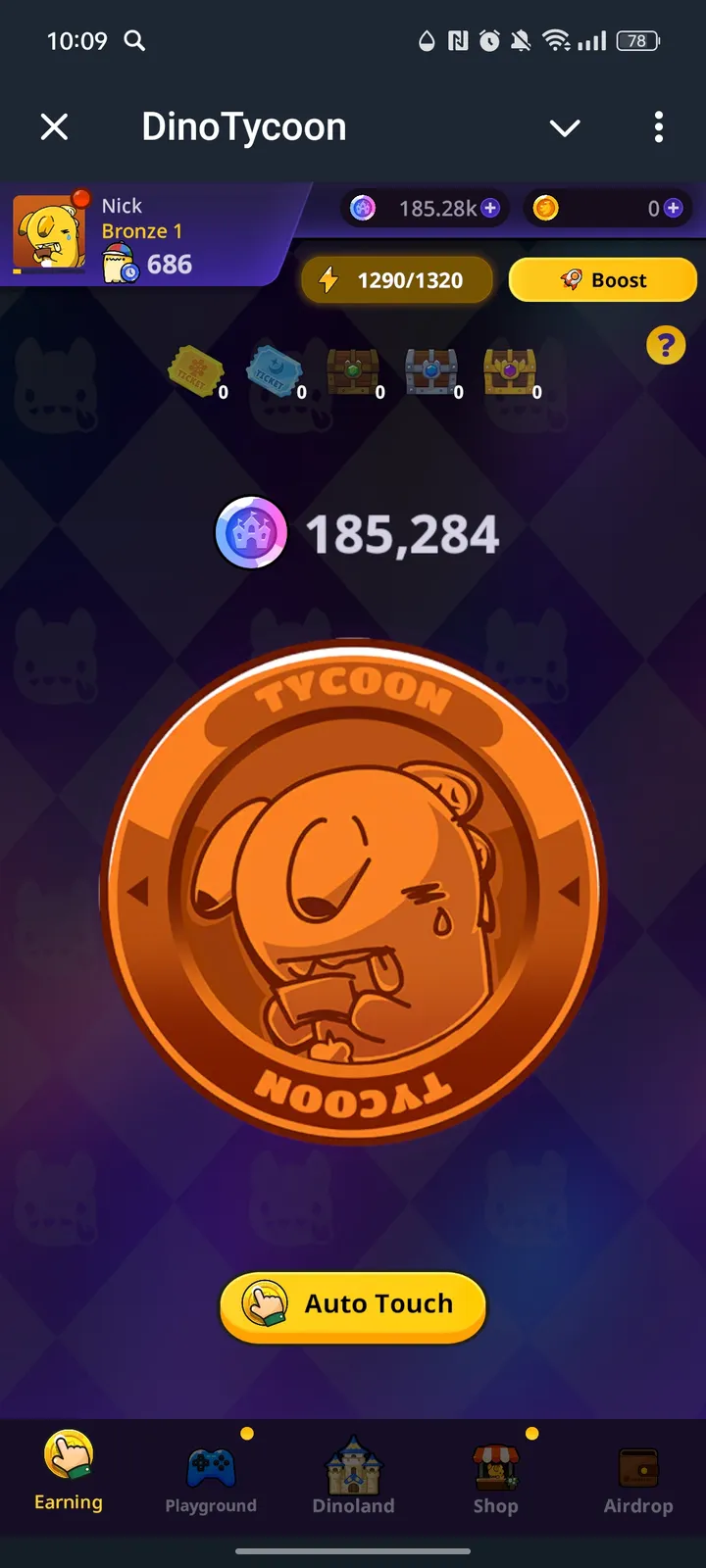
The app also includes a primary earning mechanic based on tapping. In this mode, users tap a central coin icon to accumulate in-game currency associated with the Tycoon system. The interface shows a large coin labeled “Tycoon,” along with a balance indicator that increases as the player interacts with the screen.
An auto-tap option is also available, suggesting that the system is designed to gradually automate the earning process over time.
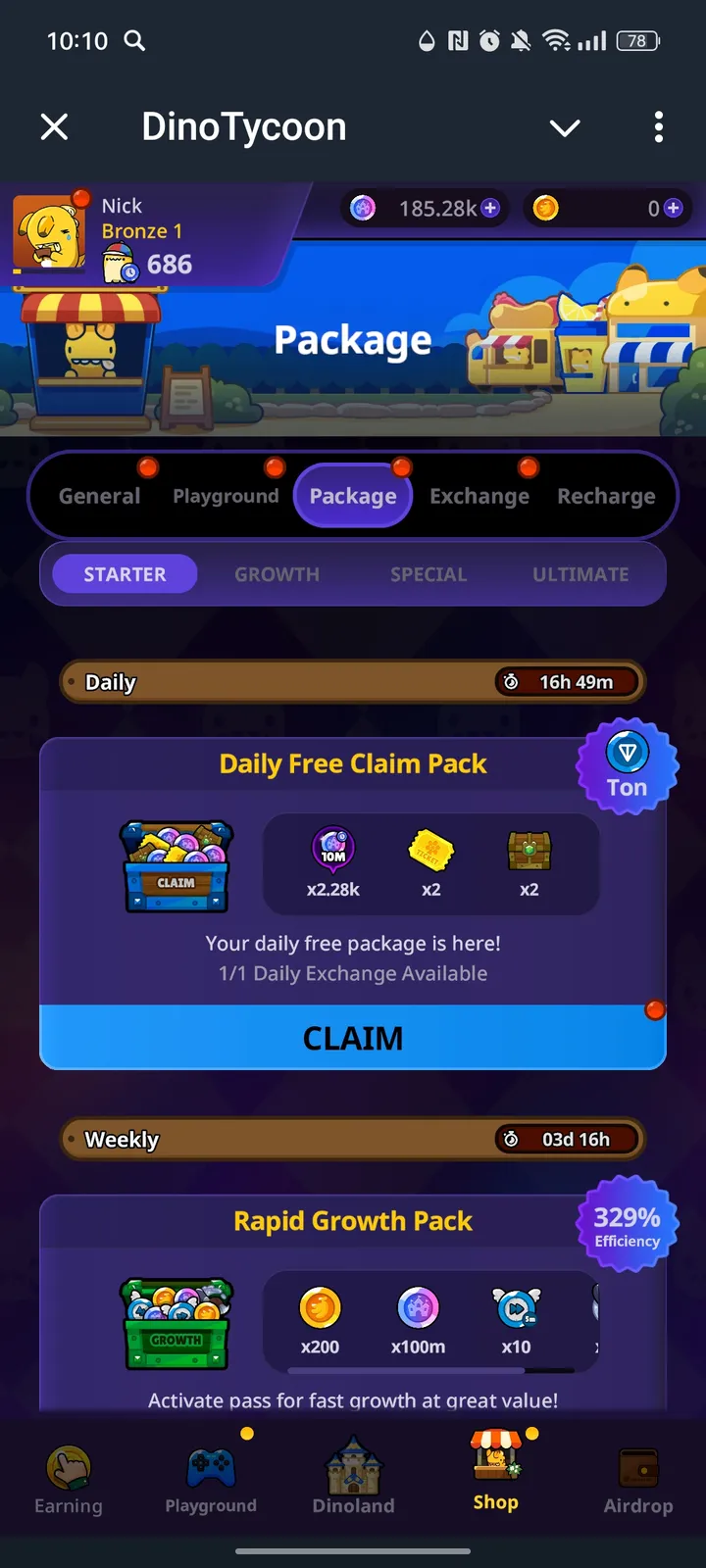
Another visible component is the reward package system located in the shop section. Here players can claim daily rewards or obtain packages that accelerate progress. The daily reward pack typically includes items like coins, tickets, and other consumable resources.
There are also growth packs and other upgrade options intended to boost earning speed and game progression.
Interface and User Experience
From a visual standpoint, DinoTycoon adopts a bright cartoon aesthetic. The dinosaurs, attractions, and park environment are designed in a playful style that resembles mobile idle games rather than complex management simulators.
Navigation is relatively simple. The main menu is located at the bottom of the screen and includes several tabs:
Earning – the tapping system used to generate currency
Playground – mini-games that offer additional rewards
Dinoland – the main park management screen
Shop – packages and reward items
Airdrop – a section likely tied to future token distributions
This structure makes the app easy to understand even for new users.
However, the simplicity of the interface also highlights a lack of deeper gameplay mechanics. Many elements appear static or locked behind progression, and the park itself feels more decorative than interactive.
The balance system, energy indicator, and reward chests suggest a progression loop similar to other Telegram mini games where repeated interaction gradually unlocks features.
While this loop can be engaging in short sessions, it may become repetitive over longer periods.
Pros
Simple and easy-to-understand gameplay
Bright, accessible visual style
Multiple small activities to keep users engaged
Integrated reward system tied to potential token distribution
Works directly inside Telegram without additional downloads
Cons
Gameplay depth appears limited
Core mechanics rely heavily on tapping and repetition
Many attractions and features remain locked early on
Token reward system is not fully explained
Long-term value depends on uncertain future airdrops
Overall Impression
DinoTycoon fits neatly into the growing ecosystem of Telegram mini apps that combine casual gameplay with crypto-style reward systems. The dinosaur theme park concept adds a bit of charm to the project, and the interface is polished enough to make the game approachable for new users.
However, beneath the colorful presentation, the mechanics remain quite basic. Much of the gameplay revolves around tapping, waiting for rewards, and completing small mini-games to accumulate points.
For users familiar with similar Telegram projects, the structure will likely feel very familiar. The potential token rewards and airdrop mechanics are clearly positioned as a major incentive, but without confirmed details, the long-term value of the system remains uncertain.
As a casual time-killer, DinoTycoon works reasonably well. As a deeper management game or a fully developed Web3 economy, it still feels early in development.
Comments
The park theme is cute, but after a day it felt like the usual tap-to-earn loop. With a 2.9 rating I’m not shocked. Has the team said anything concrete about how/when the token rewards actually get distributed?